Source Petroleum Waxes Penetration Tester for Labs, QC, and R&D
Compare 30 petroleum waxes penetration tester models from verified Chinese suppliers. Evaluate specifications like measurement range, timing, and temperature control to find the right equipment for your testing needs; compare the available evidence and request quotations based on your requirements.
Key considerations
Products List






Comprehensive Sourcing Guide
Petroleum Waxes Penetration Tester Sourcing Guide
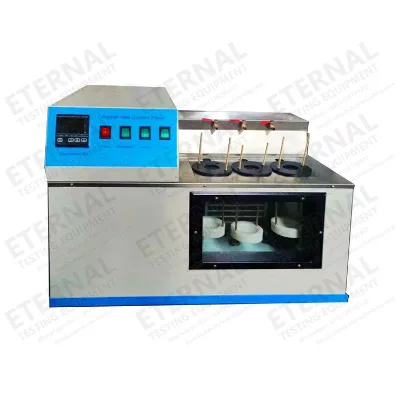
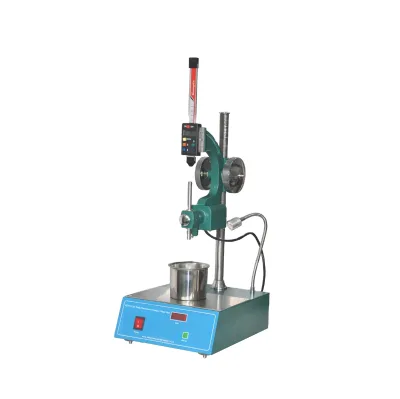
Procuring a petroleum waxes penetration tester requires a careful balance of technical precision and commercial viability, as these instruments are critical for quality assurance in lubricant and wax manufacturing. Buyers must first understand that the market offers a diverse range of models, from basic manual units to advanced automated systems with digital data logging. The core keyword "petroleum waxes penetration tester" encompasses devices designed to measure the consistency of semi-solid petroleum products, such as greases and waxes, by determining how far a standard cone penetrates into the sample under specific conditions. This measurement is vital for ensuring product uniformity and meeting industry specifications.
The sourcing process involves navigating a wide array of suppliers, primarily located in manufacturing hubs like China, where a significant portion of laboratory equipment is produced. Buyers should expect to encounter various product models, each with distinct power requirements, ranging from simple AC 220V units to more complex systems with higher power consumption. Understanding the specific operational needs of your laboratory, such as the required temperature control accuracy or the need for automatic timing, is essential before engaging with suppliers. This initial clarity helps in filtering out incompatible options and focusing on vendors who can provide the exact specifications required for your testing protocols.
Product Scope and Observed Listing Signals
The observed market signals indicate a broad spectrum of available equipment, with listed prices ranging from approximately one to twenty thousand US dollars. This wide variance suggests that buyers will find both entry-level manual testers and high-end automated systems with integrated data management capabilities. The minimum order quantity (MOQ) is consistently observed at one unit, indicating that suppliers are flexible and cater to individual laboratory purchases rather than requiring bulk industrial orders. This accessibility allows smaller labs or research facilities to procure necessary equipment without significant upfront inventory commitments, making the market highly responsive to specific institutional needs.
Product attributes reveal that customization is available for many models, allowing buyers to tailor features such as power supply configurations or environmental operating ranges to their specific facility conditions. For instance, some units operate on AC 220V±10% at 50Hz, while others may have different power efficiencies or total power consumption rates, such as 1800W for more complex systems. The presence of various models, identified by codes like HK-4985A or SYD-0615, suggests that buyers must carefully match the device’s capabilities, such as ranging accuracy or timing precision, to their specific testing standards. This diversity requires buyers to scrutinize product descriptions closely to ensure the selected tester aligns with their precise technical requirements.
Technical Specifications to Verify
When evaluating technical specifications, buyers must prioritize the ranging method and accuracy, as these directly impact the reliability of test results. Laser ranging is a common feature in modern testers, offering high precision, with some models boasting an accuracy of (650±0.01) mm. It is crucial to verify the timing mechanisms, as some devices offer manual control while others provide automatic integration with electromagnetic suction for cone release. The timing accuracy, often specified as (5s±0.1)S, is critical for standardized tests, ensuring that the penetration depth is measured under consistent conditions. Buyers should also check the resolution of the measurement, with some digital models offering a resolution of 0.1 penetration, which is essential for detecting subtle variations in product consistency.
Environmental and operational parameters are equally important for ensuring the longevity and performance of the equipment. Buyers must verify the working temperature and humidity ranges, as some testers require a controlled environment between 5°C and 45°C with humidity ≤85%, while others may have stricter limits. Additionally, the power consumption and heating or cooling capabilities, such as compressor refrigeration for temperature-controlled tests, should be assessed against the laboratory’s infrastructure. For example, some units have a heating power of 700W and cooling power of 1033W, allowing for precise temperature control during testing. Ensuring that the tester’s power requirements match the facility’s electrical capacity is a critical step to avoid operational disruptions.
Compliance and Safety Documentation
Compliance with international and national standards is a non-negotiable aspect of sourcing penetration testers, as these devices are used to validate products against strict industry regulations. Buyers must ensure that the equipment adheres to relevant standards, such as ASTM D217 or GB/T269, which govern the determination of cone penetration for lubricating greases and similar products. While specific certification statuses may vary by supplier, buyers should request documentation that confirms the tester’s calibration and compliance with these recognized testing methods. This documentation is essential for maintaining accreditation in quality management systems and ensuring that test results are legally and technically defensible in regulatory audits.
Safety documentation is another critical component that buyers must review before finalizing a purchase. This includes information on electrical safety, particularly for devices operating on AC 220V, and guidelines for safe operation of moving parts like the cone release mechanism. Buyers should also verify the environmental requirements for the device, ensuring that it can operate safely within the laboratory’s temperature and humidity ranges. Additionally, understanding the maintenance requirements and available spare parts, such as standard cones weighing 102.5±0.05g, is vital for long-term compliance and operational continuity. Proper safety and compliance documentation not only protects the laboratory staff but also ensures the integrity of the testing process.
Cost Drivers and Commercial Terms
The cost of a petroleum waxes penetration tester is influenced by several factors, including the complexity of the device, the accuracy of its measurements, and the inclusion of advanced features like digital data logging or automated timing. Higher-priced models often offer greater precision, such as laser ranging with sub-millimeter accuracy, and more robust construction materials, which contribute to their durability and long-term performance. Buyers should also consider the total cost of ownership, which includes maintenance, calibration, and potential replacement parts, rather than just the initial purchase price. Understanding these cost drivers helps in making a more informed decision that balances budget constraints with the need for reliable testing equipment.
Commercial terms, such as payment methods, shipping arrangements, and warranty coverage, play a significant role in the overall procurement experience. Buyers should negotiate clear terms regarding the delivery of the equipment, including packaging details, as some units are shipped in wooden cases to ensure safe transit. It is also important to clarify the supplier’s support policies, including the availability of technical assistance and the duration of the warranty period. Given that the MOQ is typically one unit, buyers have the flexibility to request samples or trial periods to evaluate the equipment’s performance before committing to a larger purchase. Clear commercial terms help mitigate risks and ensure a smooth transaction process.
Supplier Qualification and Quality Control
Supplier qualification is a critical step in ensuring that the purchased penetration tester meets the required quality standards. Buyers should verify the supplier’s manufacturing capabilities, including their production facilities and quality control processes, to ensure that the equipment is built to last. Suppliers located in China, for instance, may have varying levels of quality assurance, so buyers should request evidence of their manufacturing standards and any relevant certifications. Additionally, checking the supplier’s reputation and customer feedback can provide insights into their reliability and after-sales support. A qualified supplier will be transparent about their processes and willing to provide detailed information about the equipment’s construction and testing procedures.
Quality control measures should extend beyond the initial purchase to include ongoing calibration and maintenance support. Buyers should inquire about the supplier’s calibration services and the availability of certified calibration certificates for the equipment. It is also important to establish a clear protocol for handling any defects or performance issues that may arise during the equipment’s lifecycle. Suppliers who offer comprehensive quality control support, including regular maintenance checks and prompt replacement of faulty parts, are more likely to provide a better long-term value. By prioritizing suppliers with robust quality control systems, buyers can ensure that their penetration testers remain accurate and reliable over time.
Long-Term Procurement Checks
Long-term procurement checks involve establishing a framework for continuous evaluation of the penetration tester’s performance and the supplier’s support. Buyers should implement a regular calibration schedule to ensure that the equipment remains accurate and compliant with industry standards. This includes verifying the timing mechanisms, ranging accuracy, and temperature control features at regular intervals. Additionally, buyers should monitor the equipment’s performance in daily use, noting any deviations or issues that may indicate a need for maintenance or repair. By maintaining a detailed log of the equipment’s performance and maintenance history, buyers can proactively address potential problems and ensure consistent test results.
Supplier relationship management is also crucial for long-term success, as it ensures that buyers have access to necessary support and spare parts. Buyers should maintain open communication with their suppliers, providing feedback on the equipment’s performance and requesting updates on any new models or technologies. This ongoing dialogue can help buyers stay informed about advancements in penetration testing technology and make informed decisions about future upgrades or replacements. By treating the supplier as a strategic partner rather than just a vendor, buyers can build a resilient supply chain that supports their long-term quality assurance goals.
FAQs
What is the power supply requirement for the tester?
The device requires an AC 220V±10% 50Hz power supply to operate correctly. This standard voltage ensures stable performance during testing procedures. Always verify your local electrical compatibility before installation to prevent equipment damage or safety hazards during operation.
How accurate is the laser ranging measurement system?
The laser ranging accuracy is specified as 650±0.01 mm for precise distance measurements. This high precision supports reliable data collection during penetration testing. Users should ensure the device is calibrated regularly to maintain this specific accuracy level over time.
Can the equipment be customized for specific testing needs?
Yes, customization is available for this petroleum wax penetration tester to meet unique requirements. Buyers can request specific modifications to fit their laboratory workflows. Contact suppliers directly to discuss available customization options and associated lead times for tailored solutions.
What is the temperature control accuracy for the heating unit?
The temperature control accuracy is maintained at ±0.3°C for consistent testing conditions. This precision is critical for evaluating petroleum products under standardized thermal environments. The system ensures stable temperatures within the specified working range of 15°C to 28°C.
Which standards does the SYD-0168 model comply with?
The SYD-0168 model complies with ASTM D217 and GB/T269 standards for cone penetration testing. These standards define the methodology for determining the consistency of petroleum waxes. Using this model ensures your test results are recognized and valid within international industry frameworks.
What is the maximum penetration measurement range of the device?
The measurement range extends from 0 to 620 cone penetrations for comprehensive testing capabilities. This wide range accommodates various petroleum wax types with different consistencies. The resolution of 0.1 penetration allows for detailed and precise data recording during analysis.
How is the product packed for international shipping?
Products are packed in wooden cases or cartons depending on the specific model ordered. This robust packaging protects the equipment during transit and handling. Buyers should confirm the specific packing method with the supplier to ensure safe delivery to their facility.